Water Softeners and Filters in Waukesha, Kept Running for the Long Haul
We install water softeners, under-sink reverse osmosis, whole-home filtration and well water treatment for homeowners in Waukesha, Pewaukee and Brookfield. Each system is sized to your water and your household, then set up so the resin, membranes and filter media last as long as they are built to.
Water Treatment We Install and Set Up
We put in four kinds of systems: water softeners, reverse osmosis for drinking water, whole-home filtration and well water treatment. On the equipment we install, the filter media, circuit board and control valve carry 5 years of coverage. An RO unit is covered for 1 year, with its replacement filters left out of that, and the labor on your original install has a 1-year warranty. We mention the valve and media first because those parts decide how many years a system keeps doing its job.
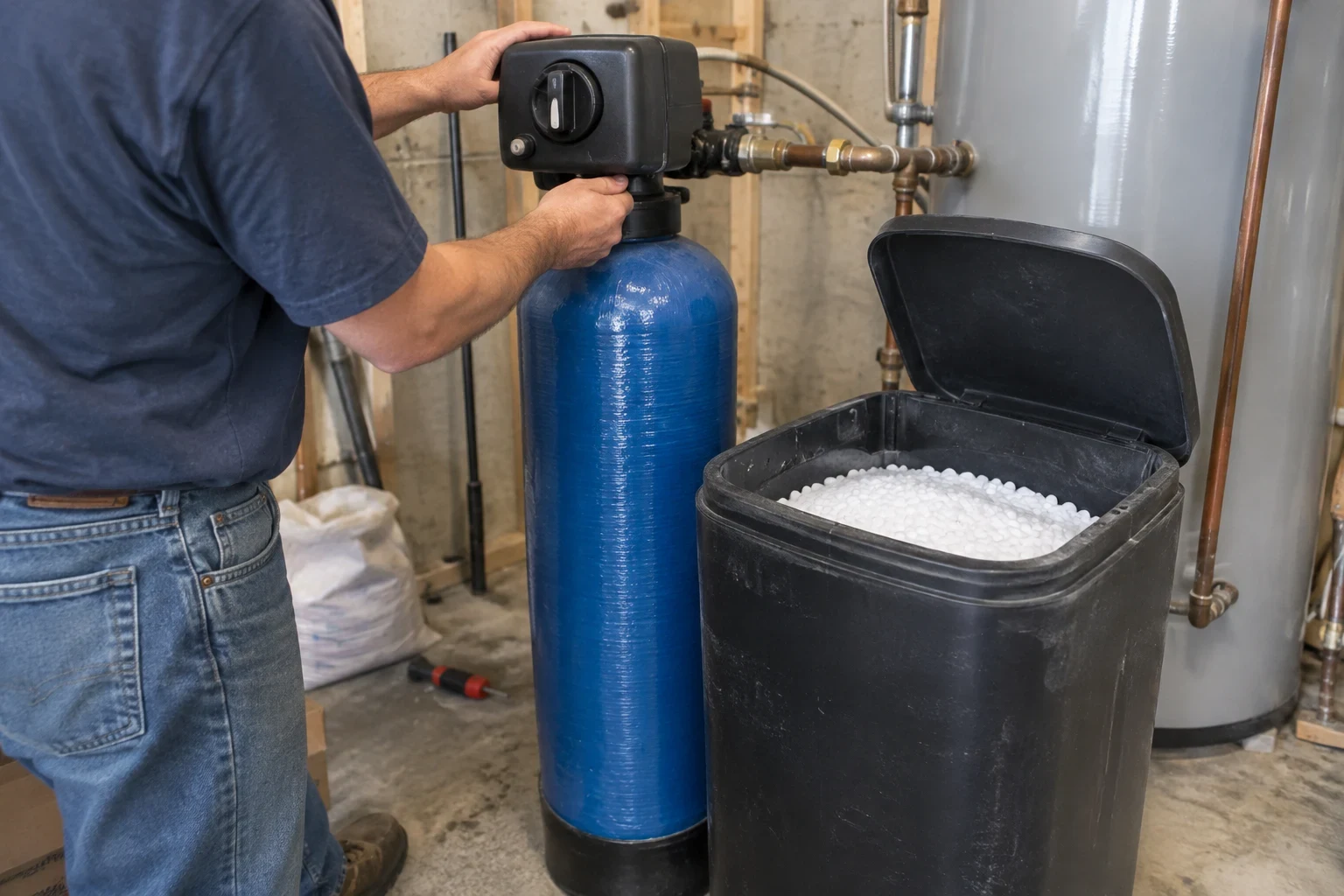
Water Softeners
Softener installs, valve and resin service, and brine tank upkeep that protect your water heater, fixtures and the softener itself.
Reverse Osmosis
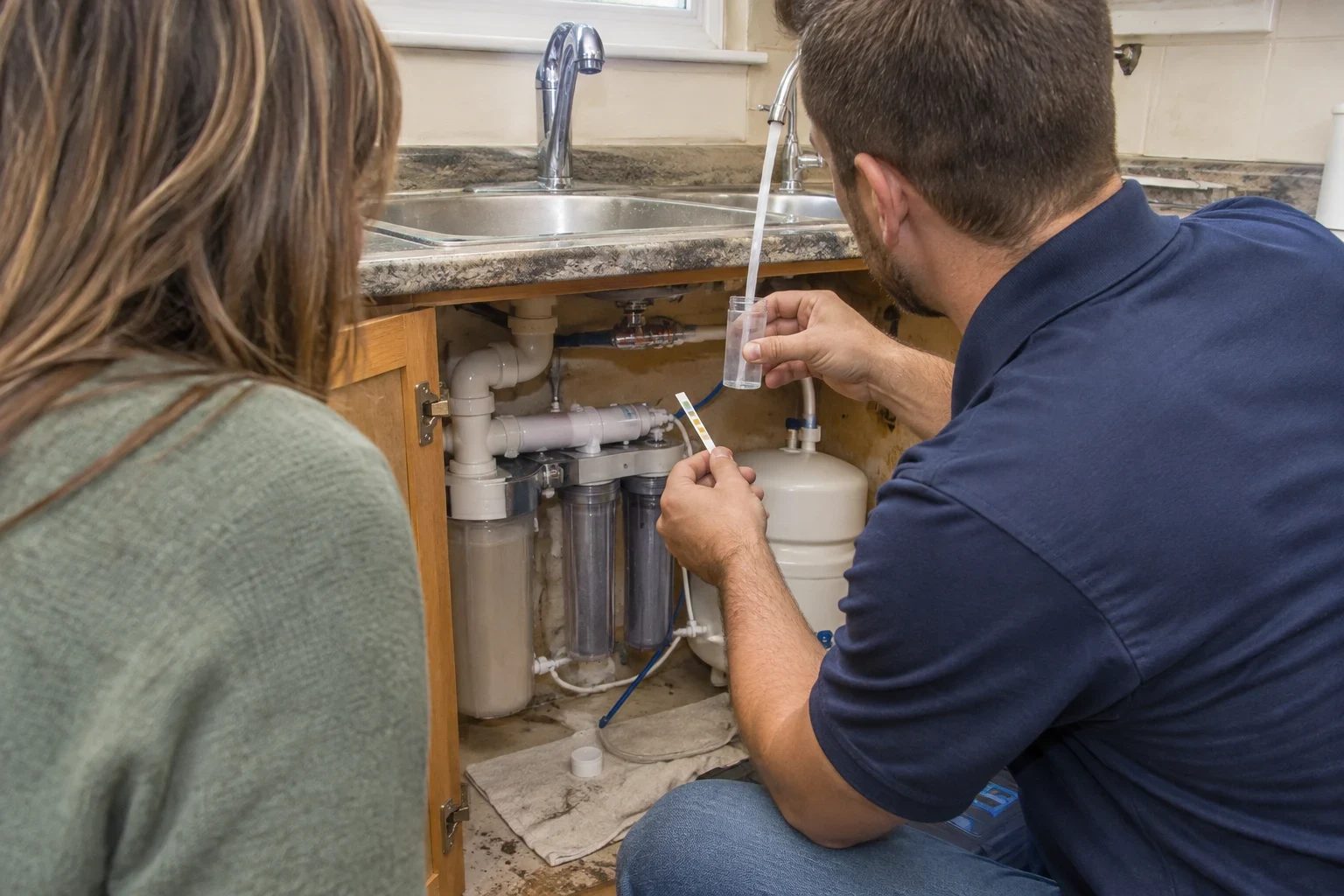
Under-sink reverse osmosis for drinking and cooking water, installed with accessible filters and a clear schedule for prefilter and membrane changes.
Whole-Home Filtration
A sediment prefilter and catalytic carbon tank on your main line, so every tap and shower runs without chlorine odor or grit.
Well Water Treatment
Iron filters, sulfur removal and softening for private wells, sized to your pump and set up so the media and valves keep working for years.
Where We Install
Our installs cover homes in Waukesha and the surrounding communities: Pewaukee, Brookfield, New Berlin, Sussex, Hartland, Vernon, Delafield, Genesee, Elm Grove and Merton. Across this area, plenty of homes are fed by the city system while others pull water from a private well. That difference shapes what we recommend. A well home often needs a sediment stage and iron removal in front of the softener, and a home on city supply may need nothing more than a softener or a carbon filter.
- Waukesha
- Pewaukee
- Brookfield
- New Berlin
- Sussex
- Hartland
- Vernon
- Delafield
- Genesee
- Elm Grove
- Merton
Don't see your town here? Mention it on the call and we will tell you right away if your home falls within our area.
About Water Softener Waukesha
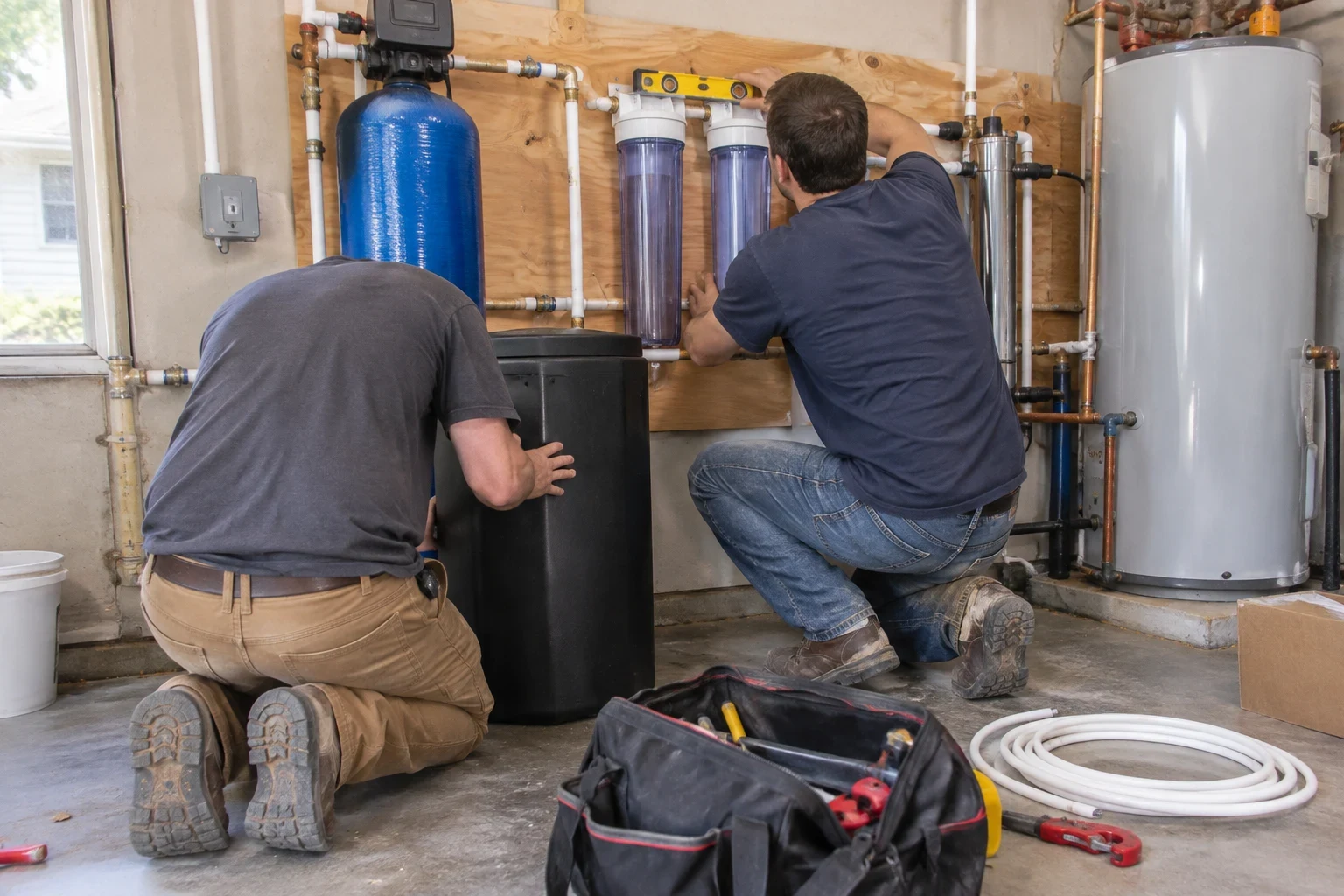
We are a local water treatment company focused on one thing: putting in softeners and filters that keep working for years. That means paying attention to the details that shorten a system's life, like a resin bed exhausted by constant regeneration, a salt bridge in the brine tank or a carbon cartridge left in long after it stopped catching chlorine.
We explain what each part does and why it wears out, so you can keep your system in good shape between visits. If something you already own still has years left in it, we would rather tell you than sell you a replacement you do not need.
- Warranty
- 5 years on control valve, circuit board and filter media; 1 year on the RO unit, filters excluded; 1 year labor warranty on the original install
From First Call to Final Walkthrough
A typical install fits inside a single workday. These are the steps between picking up the phone and getting your first filter change reminder.
- 1
A phone conversation
You tell us what your water is doing: spots on glasses, scale on the faucet aerators, orange stains, a sulfur smell or a chlorine taste. We ask how many people live in your home, where the main water line enters and what equipment is already there.
- 2
Your quote and financing details
We lay out the system we recommend, the parts it includes and the installed price. If you want to spread out the cost, we explain how U.S. Bank Avvance financing works.
- 3
Install day
With the main shut off, we tie the system in through a bypass valve so it can be isolated later. The discharge hose goes to the drain over a proper air gap, and the valve gets your hardness, salt dose and regeneration time. After that we flush the media, look over every joint for drips and clean up the work area.
- 4
Walkthrough and upkeep plan
Before we leave, we show you the bypass, the salt level line and the settings on the valve. You get a written schedule for salt, prefilters and membranes, and payment is due once the system is running.
How We Set Systems Up to Last
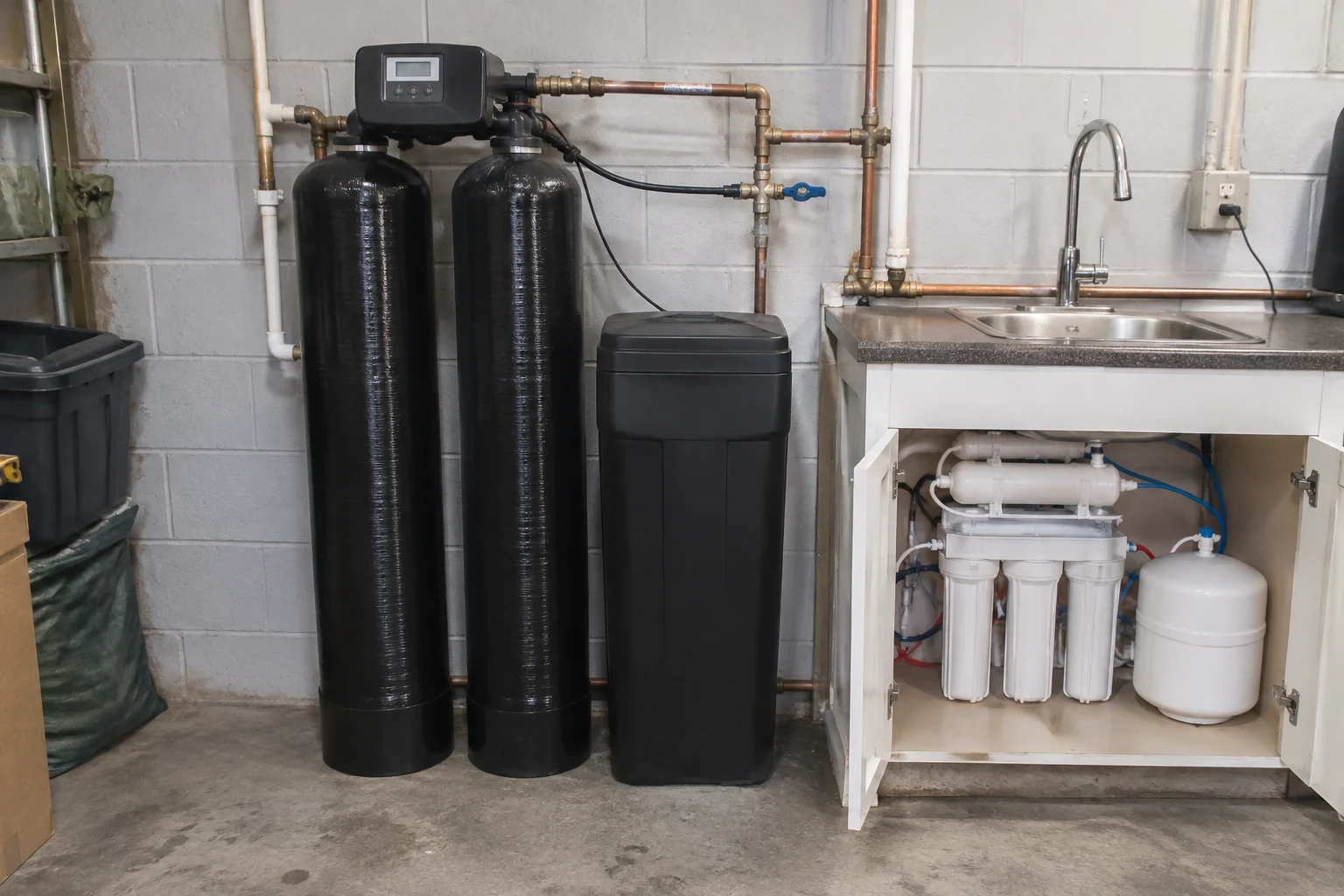
Most water treatment equipment fails early for ordinary reasons: the wrong size, the wrong settings or a skipped filter change. We plan around those causes from the first call.
- Sized by grain capacity, not guesswork
- An undersized softener regenerates too often, which burns salt and wears the resin and valve seals faster. We size the tank to your hardness level and how many people use water in your home, so regeneration runs on a sensible schedule.
- Settings that match your water
- A softener's control valve needs the right hardness number, salt dose and regeneration time to work well. We program those on install day and show you where they live, so a change in your household does not mean a weak system.
- An honest look at what you already have
- If your current softener has a sound tank and valve, replacing the resin or cleaning the brine tank may be all it needs. We tell you that plainly instead of quoting a full new system.
- Filter schedules written down
- Sediment prefilters, carbon cartridges and RO membranes each wear out at their own pace. You get a simple change schedule for every cartridge in your system, so nothing runs past its useful life and starts passing what it should catch.
What Moves the Price of a System
Houses on the same block can end up with very different equipment. Your price comes down to what is in your water, how many gallons your household runs through it and how easy the plumbing is to reach. These are the pieces we weigh.
Your quote is free by phone and holds for 30 days, and you pay in full only when the install is complete. Ask us about financing through U.S. Bank Avvance, offered on approved credit; after you sign, you still have three business days to cancel.
- Hardness and iron levels
- Harder water and dissolved iron call for more resin, a larger tank or a dedicated iron filter ahead of the softener. Higher levels mean more capacity and sometimes a second stage.
- Household size and water use
- More people, more laundry and more showers mean more gallons through the system each day. That drives tank size for softeners and flow rating for whole-home filters.
- Plumbing access
- A home with a softener loop already stubbed out near the water heater is a simpler install. If we have to run new piping, add a bypass valve or route a drain line across the basement, the labor goes up.
- Drain and power
- Softeners and backwashing filters need a drain with a proper air gap and, for most control valves, a nearby outlet. Missing either adds work.
- Removing old equipment
- Pulling out a failed softener or an old filter housing takes time, and so does hauling it away. Reusing a sound brine tank or bypass can lower the cost.
- Media and system type
- Catalytic carbon, standard carbon, softening resin and RO membranes are priced differently. Well water setups that handle sediment, iron or sulfur odor usually need more stages than a single softener.
Questions We Hear Often
Something not covered here? (262) 710-2091
Do I need a softener, a filter or both?
Each one handles a separate job. Softening resin trades calcium and magnesium for sodium or potassium, which keeps scale off fixtures and out of your water heater. Activated carbon, on the other hand, pulls out chlorine taste and smell. Plenty of homes need just one of the two, and we will say which fits once you describe what your water is doing.
Can my old softener be saved?
Often, yes. If the tank is sound and the control valve still cycles correctly, new resin, a cleaned brine tank or a fresh injector screen can bring it back. If the valve or circuit board is failing on an older unit, replacement usually makes more sense, and we explain why.
How does financing work?
We offer financing through U.S. Bank Avvance, on approved credit. On the call we go over the basics so you know what the process looks like before you decide.
What warranty coverage comes with a system?
Our systems carry lifetime coverage on tanks, valve ceramic discs and dry mechanical parts. We go over exactly what applies to your system when we quote it.
How often does a softener need attention?
Check the salt level about once a month and keep it a few inches above the water line in the brine tank. Break up any hard crust, called a salt bridge, because it stops brine from forming. Beyond that, a well-sized softener mostly runs on its own.
How long do reverse osmosis filters last?
The sediment and carbon prefilters are usually changed about once a year, and the membrane lasts longer when the prefilters are kept fresh. Chlorine that slips past a worn carbon stage is what shortens membrane life, so the prefilter schedule matters most.
When do I pay, and can I change my mind?
Payment in full comes only when the install is complete, never up front. The price we quote stays valid for 30 days. If you sign and then have second thoughts, you can cancel within three business days.
Plan a System That Keeps Working
Tell us what your water is doing and what you already have in the basement. We will explain your options, your installed price and how financing could work.